


信号、检查与应对,40+女性请收好
10月18日世界更年期关怀日
October 18—World Menopause Awareness Day
什么是围绝经期?

围绝经期是通向最后一次月经的激素过渡期。通常从40多岁开始,有时从30多岁后期开始,平均持续4 - 8年。
Perimenopause is the hormonal transition that leads up to your final period. It usually starts in your 40s, sometimes in your late 30s, and lasts on average 4 to 8 years.
这是一个正常的人生阶段,不是疾病。但症状可能真实存在、影响生活,而且非常值得治疗。
It is a normal life stage, not a disease. But the symptoms can be real, disruptive, and very treatable.
这一过渡时期分为几个阶段:
1️⃣ 生育期:月经周期规律,激素波动可预测。
2️⃣ 围绝经期早期:月经周期仍然规律,但开始出现7天或以上的波动。经期前综合征、睡眠、情绪或乳房症状可能发生变化。
3️⃣ 围绝经期晚期:月经周期开始变得不规律,可能出现整月不来(俗称“跳月”),两次月经间隔可达60天甚至更久。此阶段,潮热、夜间盗汗和睡眠问题也更为常见。
4️⃣ 绝经:绝经是一个具体的时间点:最后一次月经后满12个月。平均绝经年龄约为51岁。
5️⃣ 绝经后期:指绝经之后的岁月。部分症状会逐渐缓解,健康管理的重点则转向骨骼、心脏和大脑的长期健康。
若月经在40岁前停止,称为早发性卵巢功能不全,必须接受医学评估。
The transition happens in stages:
1️⃣ Reproductive years. Regular cycles and predictable hormone patterns.
2️⃣ Early perimenopause. Cycles are still regular but start to vary by 7 days or more. PMS, sleep, mood, or breast symptoms may change.
3️⃣ Late perimenopause. Periods are skipped, with gaps of 60 days or more. Hot flushes, night sweats, and sleep problems become more common.
4️⃣ Menopause. A single point in time: 12 months after your final period. The average age is around 51.
5️⃣ Postmenopause. The years that follow. Some symptoms settle, while long-term health of bones, heart, and brain becomes the focus.
Periods stopping before age 40 is called premature ovarian insufficiency and always needs medical assessment.
这些变化是围绝经期吗?
Could this be perimenopause?
如果您超过40岁、仍有月经,并且符合以下自查清单内多项内容,那么很可能进入了围绝经期。就诊时,请把这份自查清单带给医生。
If you are over 40, still having periods, and tick several of the boxes below, perimenopause is a likely explanation. Bring this list to your doctor.
月经周期变化
⭕ 我的月经周期比以前更短、更长,或变得更不规律
⭕ 我的月经量比以前大、经期更长,或出现血块、经血大量涌出
⭕ 我的经前期综合征(PMS)比以前更严重,或持续时间更长
Cycle changes
⭕My cycle is shorter, longer, or less predictable than it used to be
⭕ My periods are heavier, longer, or include clots or flooding
⭕My PMS has become stronger or lasts longer
身体与睡眠 💤
⭕ 我有潮热或夜间盗汗,有时只在月经前出现
⭕ 我夜间醒来后很难再入睡
⭕ 我的乳房比以前更胀痛或肿胀
⭕ 我出现新的头痛或偏头痛,或头痛/偏头痛比以前更严重
⭕ 我有不明原因的关节疼痛或僵硬
⭕ 在饮食和运动没有改变的情况下,我的体重在增加,肥胖集中在腰腹部
Body and sleep
⭕I have hot flushes or night sweats, sometimes only before my period
⭕ I wake in the night and struggle to fall back asleep
⭕My breasts are more tender or swollen than before
⭕I have new or worse headaches or migraines
⭕ I have joint aches or stiffness without an obvious cause
⭕I am gaining weight around my middle without changing my diet or exercise
情绪与心理 🤯
⭕ 我比平时更容易焦虑、易怒或情绪低落
⭕ 我注意力难以集中,或记忆力变差(俗称“脑雾”)
⭕ 我对性生活的兴趣下降
Mood and mind
⭕ I feel more anxious, irritable, or low than usual
⭕ I have trouble concentrating or remembering things ("brain fog")
⭕ My interest in sex has dropped
私密与泌尿健康 🦠
⭕ 我有阴道干涩,或性生活时感到不适
⭕ 我排尿更频繁,或尿路感染比以前更频繁
Intimate and urinary health
⭕I have vaginal dryness or discomfort during sex
⭕ I need to pass urine more often, or have more urinary infections
上述许多症状也可能由甲状腺问题、贫血、抑郁或药物引起。请注意,这份自查清单有助于您和医生沟通,但不能替代医生的诊断。
Many of these symptoms can also come from thyroid problems, anaemia, depression, or medications. A checklist supports a conversation with your doctor; it does not replace a diagnosis.
您的激素会发生什么变化?
What happens to your hormones?
在围绝经期,激素并不是直线下降。它们会上下波动,常常一个周期到下一个周期都不同。这就是症状时有时无的原因。
In perimenopause, hormones do not simply fall in a straight line. They swing up and down, often from one cycle to the next. That is why symptoms come and go.
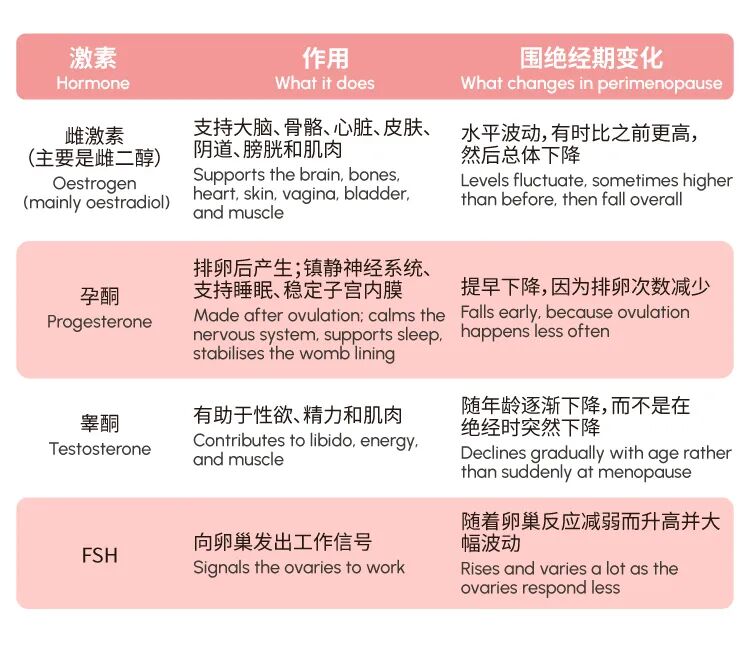
为什么这很重要?雌激素水平偏高、孕酮水平偏低的周期,可能引起月经过多、乳房胀痛和经前期综合征加重;雌激素水平偏低的周期,则可能引起潮热、睡眠不佳和情绪低落。许多女性在不同时期都会经历这两种情况。
Why this matters: cycles with high oestrogen and low progesterone can bring heavy periods, breast tenderness, and worse PMS. Cycles with low oestrogen can bring hot flushes, poor sleep, and low mood. Many women experience both at different times.
为什么体重和体型会改变?
Why weight and body shape change?
大多数女性在中年都会增重,但更显著的变化是脂肪分布发生了改变。随着雌激素下降,脂肪会从臀部和大腿转移到腹部,包括器官周围的内脏脂肪。
Most women gain some weight in midlife, but the bigger change is where fat is stored. As oestrogen falls, fat shifts from the hips and thighs to the abdomen, including visceral fat around the organs.
这一变化由多种因素共同促成:
肌肉流失: 女性从中年起肌肉流失加快,肌肉对蛋白质的反应也变差。肌肉量越少,每日能量消耗越低。
胰岛素抵抗: 雌激素水平下降、腹部脂肪增加,会使血糖更难控制。
睡眠不佳: 夜间盗汗和频繁醒来会升高第二天的食欲相关激素水平,并加重对食物的渴望。
生活压力与负担:工作、育儿和照顾年迈父母的责任常常同时达到高峰。
活动量减少:疲劳和关节疼痛可能让人在不知不觉中减少日常活动。
Several things drive this together:
Cycle changesMuscle loss. Women lose muscle faster from midlife, and muscle becomes less responsive to protein. Less muscle means lower daily energy use.
Insulin resistance. Lower oestrogen and more abdominal fat make blood sugar harder to control.
Poor sleep. Night sweats and waking raise appetite hormones and cravings the next day.
Stress and life load. Work, children, and ageing parents often peak at the same time.
Lower activity. Fatigue and joint pain can quietly reduce daily movement.
好消息是:这些变化并非不可避免。力量训练、摄入足够的蛋白质、改善睡眠,以及在适当情况下使用激素治疗或体重管理药物,都可以改变这一趋势。目标不只是让体重秤上的数字下降,而是保住肌肉、保护骨骼,并降低心血管疾病和糖尿病风险。
The good news: this is not inevitable. Strength training, enough protein, better sleep, and, where appropriate, hormone therapy or weight-management medication can change the trajectory. The aim is not just a lower number on the scale but keeping muscle, protecting bones, and lowering heart and diabetes risk.
哪些血液检查有用?
Which blood tests are useful?
对于45岁以上、有典型症状的女性,围绝经期是依据症状和月经周期变化来诊断的,而不是靠血液检查。激素水平每天波动很大,因此单次检查结果可能这周正常、下周就出现异常。
对于45岁以下、症状不典型,或40岁前月经停止的女性,FSH 检查可能有用。
For women over 45 with typical symptoms, perimenopause is diagnosed from symptoms and cycle changes, not a blood test. Hormone levels swing so much from day to day that a single result can be normal one week and abnormal the next.
FSH may be useful in women under 45, when symptoms are unusual, or when periods stop before 40.
血液检查仍有重要价值,可用于排除其他原因,并评估长期健康状况:
Blood tests are still valuable to rule out other causes and to check your long-term health:
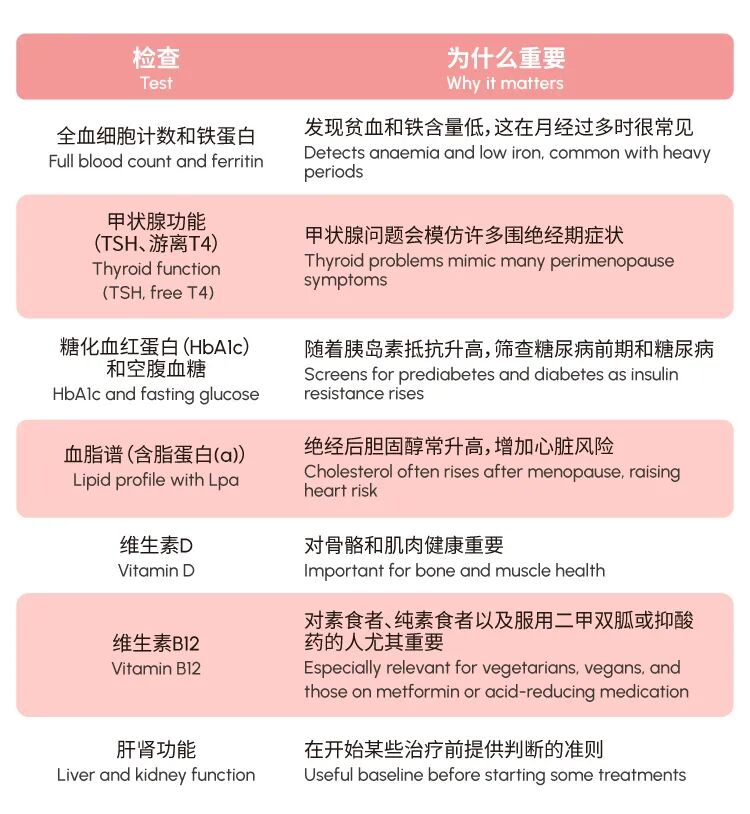
医生可能会根据你的病史增加其他检查,例如因月经过多安排盆腔超声,或如果你有骨质疏松的危险因素,安排骨密度检查。
Your doctor may add other tests based on your history, such as a pelvic ultrasound for very heavy bleeding or a bone density scan if you have risk factors for osteoporosis.
基础措施
生活方式虽然不能替代激素治疗,但会显著影响你在过渡期的感受以及之后的健康。
Lifestyle cannot replace hormones, but it strongly shapes how you feel through the transition and your health afterwards.
营养💊
每日蛋白质摄入量建议为每公斤体重约1.0~1.2克,并尽量按每餐25~30克分配。
饮食可参考地中海饮食模式,以蔬菜、豆类、全谷物、鱼类和健康脂肪为主。
每天摄入富含钙的食物,有助于保护骨骼,如乳制品、钙强化豆奶、用钙盐点制的豆腐、沙丁鱼。
减少超加工食品和含糖饮料的摄入,以免加重胰岛素抵抗。
Nutrition
Aim for about 1.0 to 1.2 g of protein per kg of body weight daily, spread as 25 to 30 g per meal.
Build meals around vegetables, legumes, whole grains, fish, and healthy fats, in a Mediterranean-style pattern.
Include calcium-rich foods daily for bone health: dairy, fortified soy milk, tofu set with calcium, sardines.
Reduce ultra-processed foods and sugary drinks, which worsen insulin resistance.
力量训练🏋🏻
每周进行2~3次抗阻训练,比单纯有氧运动更有利于保护肌肉和骨骼。
同时,配合规律步行或其他有氧活动,有助于心脏健康和情绪改善。
Strength training
Two to three sessions a week of resistance exercise protect muscle and bone better than cardio alone.
Add regular walking or other aerobic activity for heart health and mood.
睡眠🌙
- 如果夜间盗汗或频繁醒来导致大多数夜晚睡眠受影响,请告知医生:这种情况是可以治疗的。
保持规律的入睡和起床时间,卧室宜凉爽、黑暗。
Sleep
If night sweats or waking disrupt sleep most nights, speak to your doctor: this is treatable.
Keep a regular sleep and wake time, and a cool, dark bedroom.
压力🧑🏻💻
哪怕每天只做10分钟的放松练习,如呼吸练习、瑜伽或到户外活动,也会有所帮助。
认知行为疗法(CBT)对更年期潮热、睡眠问题和情绪低落有较好的证据支持。
Stress
Even 10 minutes a day of a calming practice, such as breathing exercises, yoga, or time outdoors, can help.
Cognitive behavioural therapy (CBT) has good evidence for hot flushes, sleep, and low mood in menopause.
酒精与吸烟🍷
戒烟有助于减少潮热,并保护骨骼和心脏。
酒精往往会加重潮热和睡眠问题,也会影响体重。许多女性到了中年会发现,自己对酒精的耐受性变差了。
Alcohol and smoking
Alcohol often worsens hot flushes, sleep, and weight. Many women notice they tolerate it less in midlife.
Stopping smoking reduces hot flushes and protects bones and heart.
何时寻求医生的帮助?
如果症状已经影响到你的睡眠、工作、人际关系或生活质量,建议预约就诊,不必等到月经停止。
Book an appointment if symptoms affect your sleep, work, relationships, or quality of life. You do not need to wait until periods stop.
📄如有以下情况,请尽快就医:
🔸性生活后出血,或两次月经之间出血
🔸月经过多、经血大量涌出,或出现气短、头晕等贫血症状
🔸停经满12个月后再次出现任何阴道出血
🔸40岁前停经
🔸持续情绪低落、焦虑,或出现自伤念头
See a doctor promptly if you have:
🔸Bleeding after sex or between periods
🔸Very heavy bleeding, flooding, or symptoms of anaemia such as breathlessness or dizziness
🔸Any bleeding after 12 months without a period
🔸Periods stopping before age 40
🔸Persistent low mood, anxiety, or thoughts of self-harm
下一步建议 Your next steps
🔺对照完成上述的症状清单
🔺连续记录2~3个月的月经周期和症状
🔺记录家族史,包括心脏病、糖尿病、骨质疏松和乳腺癌
🔺预约就诊,与医生讨论您的症状、接受检查和治疗方式
🔺Complete the symptom checklist above
🔺Track your cycle and symptoms for 2 to 3 months
🔺Note your family history of heart disease, diabetes, osteoporosis, and breast cancer
🔺Book a consultation to discuss your symptoms, tests, and treatment options
好文章,需要你的鼓励